Across Ontario, ordinary lots can now hold three to six homes — worth far more than the house on them. PlexEdge finds the ones the market has mispriced, proves what they can become with a licensed team, and takes them from concept to keys.
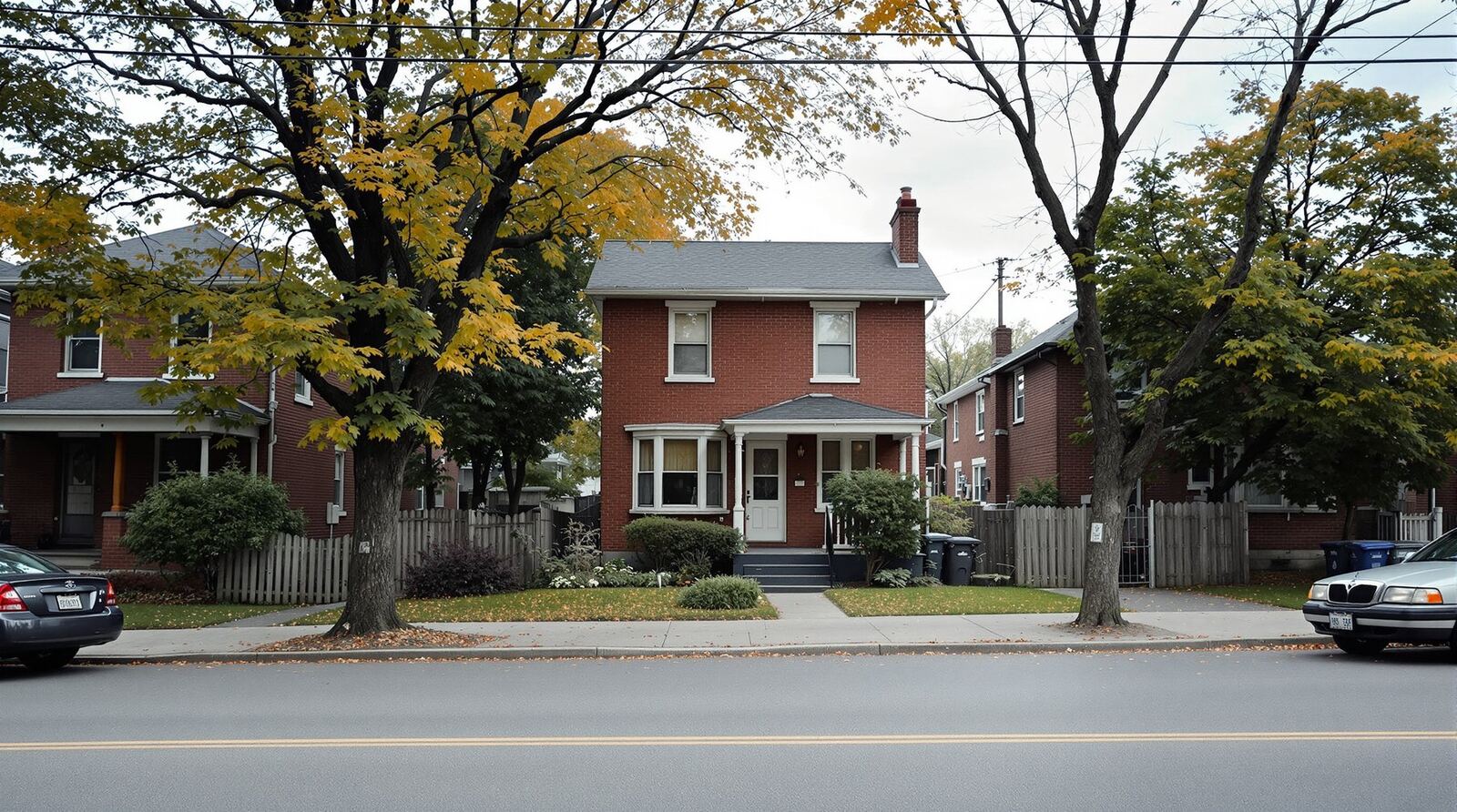
Before
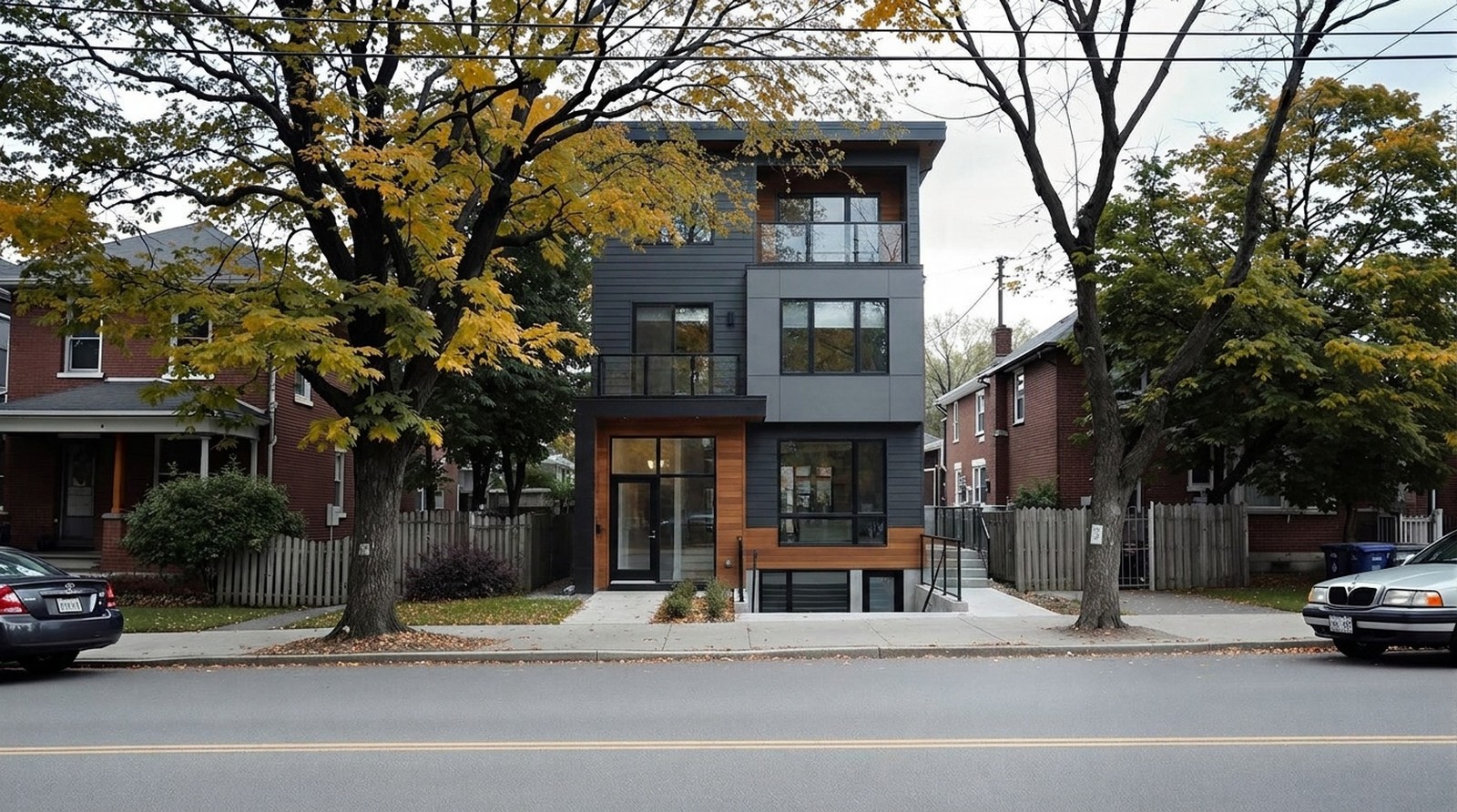
After · a fourplex that fits in
Same lot, same street — four homes where one stood, and the block still looks like itself.
Illustrative concepts, not past projects. A conversion reads differently in every Ontario neighbourhood — often we keep the existing home and add units, rather than tear down.
Priced below a detached home — a real step onto the ownership ladder.
Rental units help offset the mortgage and property taxes for the owner.
Three to six homes on a lot, at a low-rise scale the street keeps.
Better insulation, soundproofing and efficiency, to today’s building code.
The idea is old and simple: own a small multi-unit building, live in the best part of it, and let the other homes help carry the mortgage. Across Ontario it gets branded “house-hacking” — a clever trick, trailed by every nightmare-landlord story you’ve heard. That word is what scares good people away from a genuinely good home.
In Montreal, we never used it. For generations it was simply how families lived — the owner’s side the largest and the nicest, with the yard, the garage and the bedrooms together, and steady neighbours in the homes alongside. Done properly, with the right design and honest expectations, it isn’t a hack. It’s live-in ownership: a real home that quietly pays for itself.
The building was never the hard part. The craft is living well alongside your tenants — the courtesy, the boundaries, the small rules that keep everyone comfortable. That is what we grew up with, and the part most owners here were simply never taught.
Taran Aujla
Grew up in — and invested in — the family’s multiplexes. A real estate lawyer for nearly a decade, now on the deal side as a Salesperson, unlocking the multiplex for live-in owners and investors.
Learn more about me ›We read listings the market sees as “old house,” not development site — the wide, corner and deep lots that support real density.
Zoning confirmed, a concept drawn, and real build numbers from our licensed architect and construction partner. No fantasy math.
The opportunity priced on what it can become, marketed to the buyers who value it — investors, builders and live-in owners.
Design, permits and construction coordinated with our partners through to key handover. You have one point of contact.
We assess your property’s real multiplex potential, prove it with a concept and real numbers, and either sell it for what it can become — or coordinate the full build with our licensed partners while you keep ownership and the income.
Get a free lot review ›Join our private buyer list. We source lots with genuine multiplex upside, underwrite them to real leased rents — not aspirational numbers — bring a concept and a build quote, and represent your purchase end to end.
Join the buyer list ›
Where the lot allows, a garden or laneway suite adds another unit without buying more land — extra income, space for family, and more of what a property can become.
We check what your lot actually permits, because the rules differ by city, and design the suite to fit the yard, the parking, and the budget.
Ask about your backyard ›Premium plexes sit vacant when they’re built on fantasy rents. We price every opportunity on real leased comps and honest lease-up time, and we label exactly how far a project has been proven — so you never mistake a possibility for a permit.
Zoning & lot reviewed. Preliminary only.
Architect concept + preliminary build budget.
Zoning certificate obtained from the city.
Drawings, engineering, permit applied or issued.
Since 2000, I helped run my family’s multiplexes in Montreal alongside my father and brother — while I was still studying and working. It was never a plan or a title. It was simply how we lived, and I don’t think any of us would have called ourselves “landlords.” The buildings just worked: the rents covered the mortgage, so we lived in our own home without really paying for it. That is the quiet math of a well-run plex, and it is the first thing real estate ever taught me.
I went on to invest on my own before moving to the deal side as a licensed Salesperson. I have lived in a plex, collected the rent and fixed what broke — so I read these buildings as homes and businesses, not just listings.
A multiplex is income-producing housing. It has to be structurally sound, presentable, and genuinely well built inside: quality materials, real soundproofing, and proper separation between units so every household lives well. That is where the money should go.
Too many builders in the GTA treat multiplexes like custom luxury homes — which only adds cost, not value. We keep projects affordable by spending on what matters (durability, function, livable homes) and skipping the expensive finishes that don’t earn their keep.
Real estate investor and former real estate lawyer who grew up managing his family’s multiplexes. Finds the deal, reads the potential, and represents the sale or purchase — through HomeLife G1 Realty Inc., Brokerage.
Zoning, feasibility, stamped drawings and permits from a licensed OAA architecture and engineering firm. The concept and the approvals.
A real builder producing firm quotes and delivering the project — so the numbers on paper hold up on site.
Send an address or your criteria. We’ll tell you honestly whether the multiplex math works — nothing binding, no pressure.